

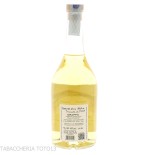
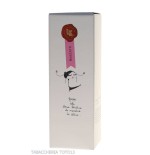
The grappas of Lidia and Romano Levi, from Neive.
It is often wrong, when talking about grappa, to think only of Romano.
They should be called LIDIA AND ROMANO LEVI'S GRAPPAS, both because the distillery was the undivided inheritance of the brothers, and because Lidia, on the first floor of the house in which she isolated herself leading an almost monastic life, selected and created the very rare bottles of herbal grappa .
Lidia was Romano's older sister, an exceptional woman, protective, severe and guarded; This is how Romano speaks about her in an interview:
"....for me (her presence) was very helpful because I certainly wouldn't be here at this point... yes she is strict with me too and therefore she was very useful in my work. She also works to make herbs which are works of art in the bottles. For me it was very useful."
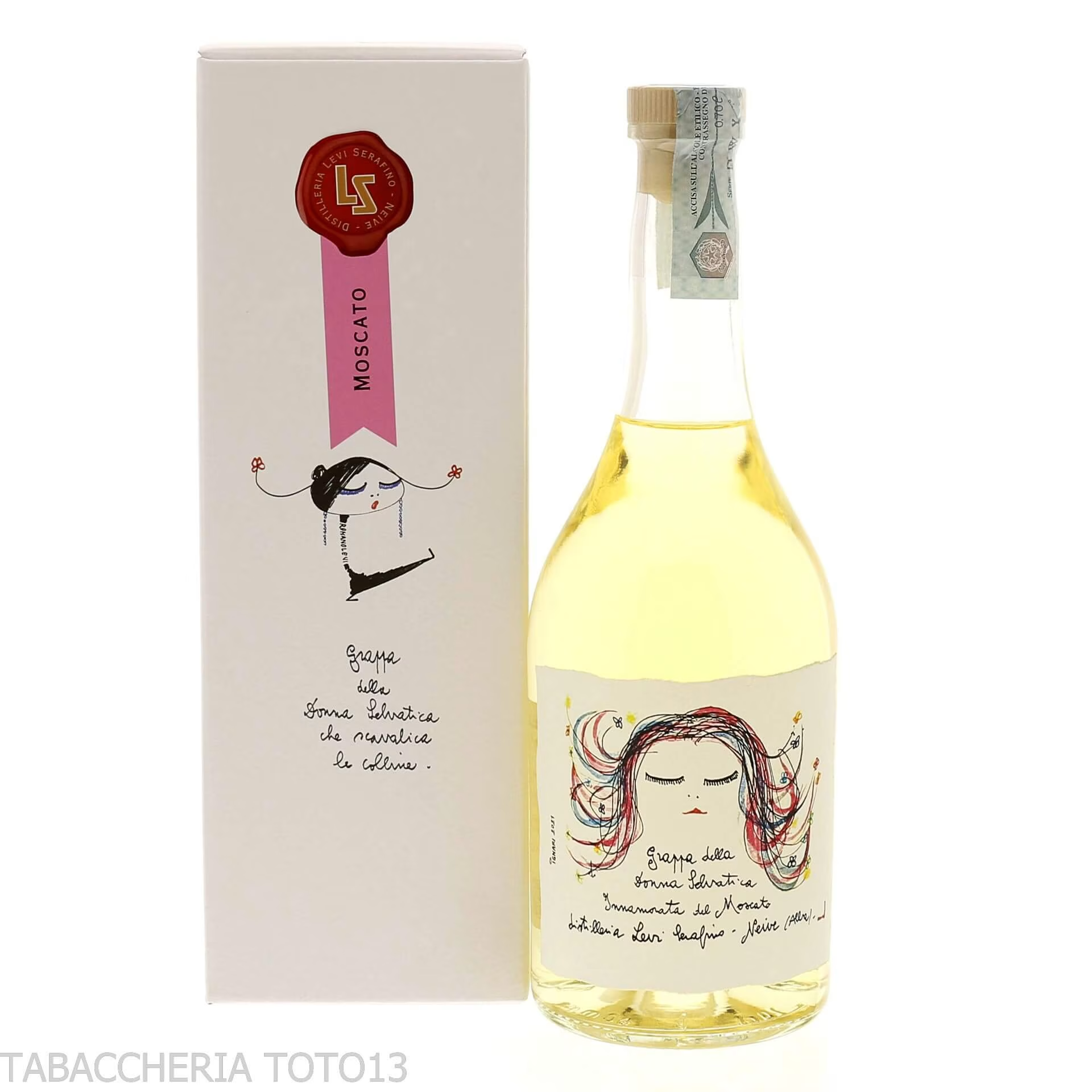
But it is to Romano that we owe the great fame achieved by his bottles of grappa for their hand-written labels and then enriched with poetic phrases or naive drawings, those little masterpieces that today we define as "WILD ART".
The distillery was built by Serafino Levi and was equipped, then as today, with a direct fire still, as we learn from one of the rare interviews given by his son Romano in 1991, where a few expert craftsmen work, defined by Romano himself as "unaware"... because they are unaware of the danger they run as high heat distillers can explode.
To use a high heat distiller requires great expertise and skill, but this procedure perfected by Romano Levi and still strictly respected today, guarantees the perfect maintenance of all the aromatic components, which are crucial for the organoleptic characteristics of Grappa.
Here we offer the Levi grappa of the Moscato wild woman.
The pomace of the great Piedmont DOC – DOCG wines comes from the Langhe, places where the vine has found one of its greatest expressions; the resulting Grappa finds an extraordinary and exciting balance resulting from tanning in underground pits.
For this Moscato grappa from the Levi Serafino distillery, Moscato d'Asti DOCG pomace is used.
This tanning then passes into the discontinuous copper still, the only one in the world, still active with direct fire for the distillation of grappa.
The grappa of the Selavtica woman in love with Moscato then ages for about a year.
Aging in barriques of approximately 220 litres, made of wood of different essences, stored in a room with the right humidity and at a constant temperature between 14 and 19 degrees C°.

Data sheet
Specific References
You might also like