

Since 1887, Clément rum has been produced according to the purest traditions and rules inherited from Homère and Charles Clément.
Jealously guarded, this family recipe has been passed down from generation to generation, reaching the present day exactly as it was two centuries ago.
In 1880, Maison Clément belonged to Virginie de Franqueville and Georges du Prey de la Ruffinière.
Following the great sugar crisis, the estate was seized and subsequently repurchased in 1887 by Doctor Homère Clément, one of the island's first doctors, who was also mayor of Le François and a member of the Martinique government.
Having large sugarcane holdings (the fields extend over 100 hectares around the house), the sugarcane was initially processed in the factories of Le François. Later, towards the beginning of the 20th century, he established his own distillery, producing rum according to ancient agricultural traditions.
This rum became highly renowned and famous for its high quality.
A visit to the distillery allows you to discover the production methods of Rhum Agricole, starting with the processing and harvesting of the sugarcane. It also allows you to breathe in the aromas of approximately 1,000,000 liters of rum aging in oak barrels from the Kentucky Bourbon production process.
Martinique's climatic conditions also significantly accelerate the aging process.
His son, Charles, thanks to his engineering studies, improved the company by introducing innovative and modern export and promotion methods.
He transformed the house into a veritable venue for entertaining important guests or hosting events.
Today, Maison Clément, one of the oldest properties on the island, has become a historic monument and is the only Creole house on the island still open to the public.
The house has welcomed numerous guests and visitors, including President George Bush and President François Mitterrand during a summit in March 1991.
The production of old agricultural rum is subject to strict AOC controls, which include inspections of the sugar cane, distillation, barrels, aging method, bottling, and more.
The aging process is three times faster in Martinique, depending on the climate: an average of 35°C (95°F) throughout the year with high humidity.
Each year, evaporation accounts for 10% of the barrel volume. At the Clement distillery, things haven't changed; the old methods still reign supreme on the estate.
The sugarcane is cut by hand to select the base where it's richest in sugar.
The purity and richness of the cane juice are crucial to producing a perfectly natural rum like Clement's.
Its production is the very proof of its original character; the pure cane juice, after fermentation, is distilled and then placed in small oak barrels holding just 200 liters, to achieve incomparable finesse.
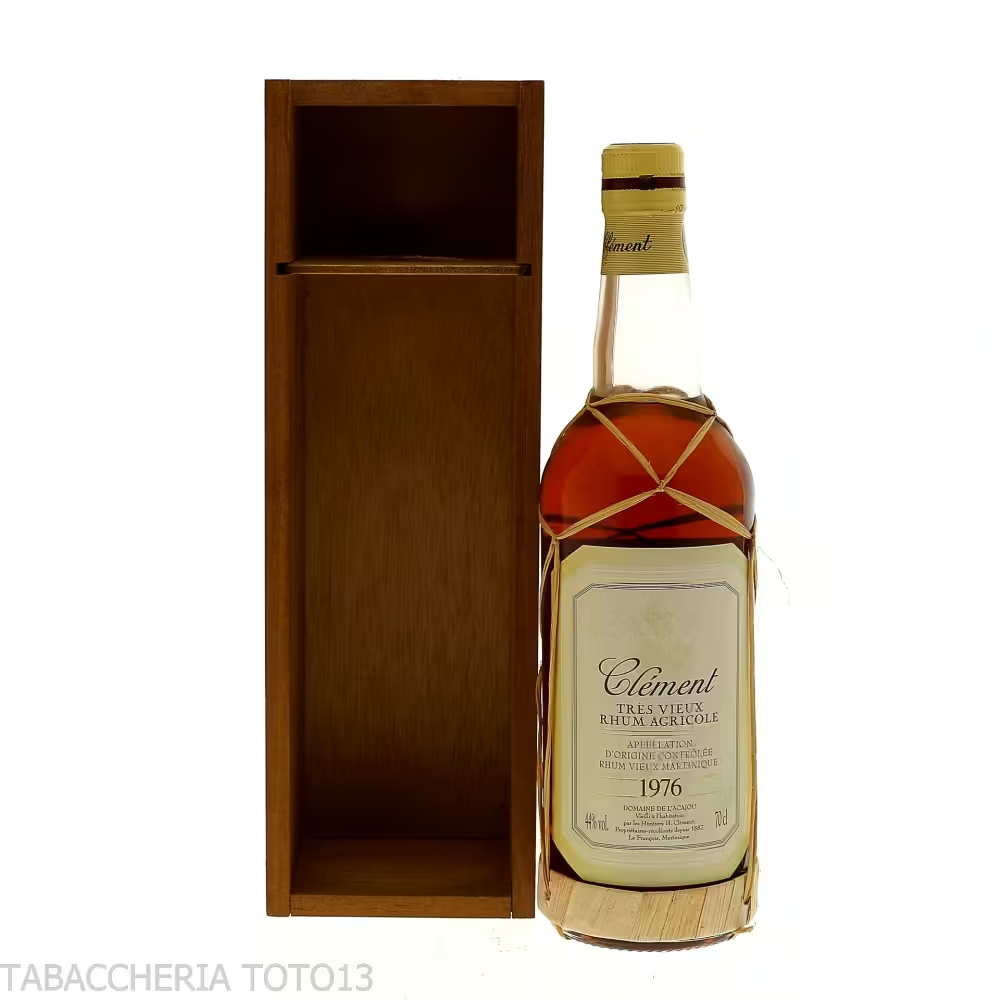
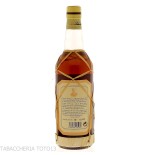
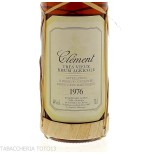
According to Clément's cellar master, Mr. Robert Peronet, the year 1976 produced the best sugarcane of the century and, consequently, the best agricole rum of the century: Clément Rum 1976.
This 1976 vintage rum epitomizes Clément's unwavering dedication with its power and freshness.
The 1976 vintage Clément rum has been aged for 20 years in oak barrels under the Martinique sun.
Connoisseurs appreciate its intense color, complexity, and richness of spicy aromas with hints of almond and toasted hazelnut.
To fully enjoy the 1976 vintage Clément rum, it is best served in a large glass, at room temperature, and paired with a good cigar.
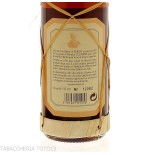
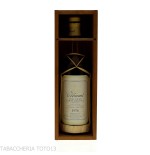
N.B.: Original bottle from 1992, in excellent condition, SIE number DD 12082. The original wooden box is missing the lid.

Data sheet
Specific References
You might also like