

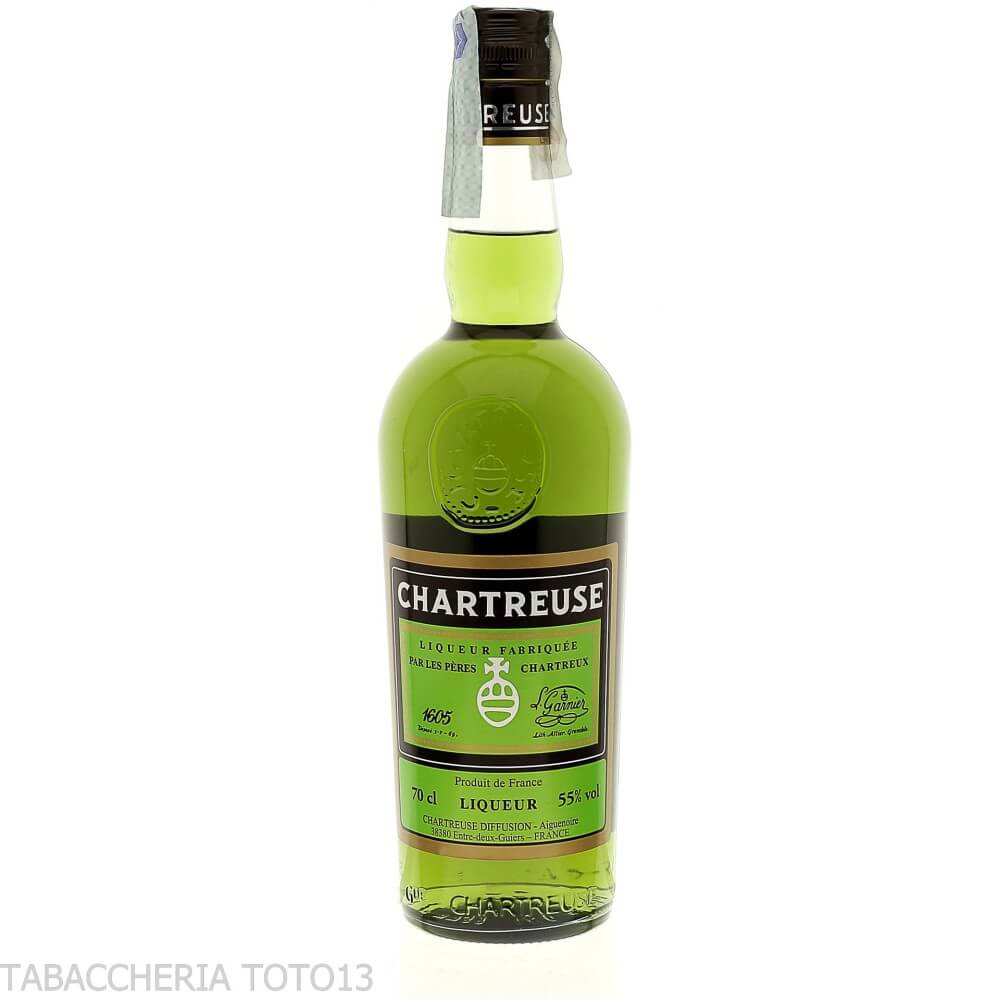
Green Chartreuse is not simply a liqueur; it is an enigma enclosed in a bottle. Known worldwide as the only liqueur with a completely natural green color, it owes its fame to a secret recipe dating back to the 17th century, still guarded today by the Carthusian Monks (Pères Chartreux) in the cellars of Voiron, France.
This guide explores the history, organoleptic profile, and secrets of what is often called the "King of Liqueurs"—an essential product for both the solitary connoisseur and the professional bartender.
The legend of Chartreuse began in 1605, when Marshal d'Estrées presented the monks at the Charterhouse in Paris with a manuscript containing the recipe for an "Elixir of Long Life." Due to its extreme complexity, the recipe was only perfected in 1737 by the monastery's apothecary, Frère Jérôme Maubec.
From that moment, production evolved, surviving the French Revolution and the monks' exile, eventually reaching us as Green Chartreuse (first produced in 1764). To this day, only two monks know the names of the 130 herbs and plants used and the precise distillation process.
The distinctive character of Green Chartreuse lies in its composition:
Green Chartreuse is famous for its high alcohol content (55% ABV), which serves as the vehicle for an explosion of flavors.
To fully appreciate the complexity of Green Chartreuse, it is essential to pay attention to the service temperature.
The best way to taste it is very cold, served in a tasting glass or a small liqueur glass. Traditionally, it is sipped as a digestif after a significant meal, often accompanied by a single ice cube to soften the alcoholic strength and release the volatile aromas.
Green Chartreuse is a pillar of both classic and contemporary mixology. Among the most famous cocktails are:
Unlike most liqueurs, Chartreuse continues to evolve in the bottle. Bottles of "Chartreuse V.E.P." (Vieillissement Exceptionnel Prolongé) or limited editions are highly sought after by collectors worldwide. The bottling date (decipherable from the batch number) is a key detail for connoisseurs wishing to compare different vintages.
What is the difference between Green and Yellow Chartreuse? Green Chartreuse has a 55% ABV and is more intense, balsamic, and complex. Yellow Chartreuse (created in 1838) has a lower alcohol content (43%), is sweeter, and is dominated by notes of saffron and honey.
Does it contain artificial dyes? No. Chartreuse is the only liqueur in the world with a green color derived entirely from the plants used in the recipe.
Is it suitable for aging? Yes, it is one of the few liqueurs that significantly improves with time spent in the bottle, refining its pungent notes into a more harmonious profile.
Data sheet
Specific References
You might also like